Saturday, February 26, 2011

Thank you to all our sponsors

Asociación SOLAC would like to give thanks to all who sponsored the successful development of this project: the Austrian Embassy in Lima, the French NGO Education World 86, the European Schools of Brussels and Culham, as well as the private donations of family and friends.

Furthermore, the Microfinance team in particular would like to thank all who gave counsel and advice, and moral support throughout.

Meeting at the Austrian Embassy

On the 18th of January, SOLAC went to the Austrian embassy to hand in the final report of the microfinance project. We had a meeting with Mag. Rudolf Koestler, one of the people from the embassy who had been following SOLAC and the microfinance project. Mag. Koestler on behalf of the Austrian embassy thanked SOLAC for the work that had been accomplished in Alto Perú. We also had the chance to briefly meet the ambassador who also expressed his satisfaction with the results of the project. SOLAC would like to take this opportunity to thank the Austrian Embassy for supporting our work in Huachipa.

End of Project Day trip


SOLAC decided to organise a day trip for the participants of the microfinance project on the 5th of January 2011. The aim of this event was for the participants of the different ASOLs to get to know each other through different activities and games. The event was also planned as an end of project activity where the participants and the project coordinators could spend a day together before the official ending of the pilot project. SOLAC organized the event in a countryside club in the town of Chosica (eastern periphery of Lima). The participants where divided into three groups for the day. Each team had to decide a name and participate to a series of activities such as a Volleyball tournament, dance competitions, musical chairs, etc. The event also included a lunch where several participants spontaneously decided to make a speech thanking SOLAC for the work carried out in Alto Perú. All the beneficiaries expressed their contentment with day trip and said it was a very nice way to spend a time with the SOLAC team before the end of the project.

End of Project Day trip


Continuation of Practical Workshops


Due to the success of the practical workshops in Alto Perú, SOLAC decided to fund a continuation of the courses. A lot of the participants, especially from the jewellery course, were already using the skills learnt in the workshops to implement a new economic activity, and were eager to learn more. Since it was the second set of workshops, we decided to give more responsibility to the participants of the courses. SOLAC appointed one person for each course who was responsible for the organisation and the smooth running of the workshops. One person per community had also been appointed to collect the signing-up fee from people in their area. SOLAC decided to work with the same teachers as in the previous course due to the amazing work they had accomplished. The participants also asked for the same teachers as they had developed a very strong relationship with them. The knitting and jewellery workshops are composed of 20 and 39 people respectively. The latter will be divided into two workshops, a basic one for new participants and an intermediate one for the old participants. The knitting workshop will take place on Wednesdays and Saturdays and both jewellery courses on Sundays. Since SOLAC officially closed the microfinance project on the 14th of January 2011, the responsibility of following the workshops has been passed on to the former microfinance coordinators, Valentina Martufi, Ruth Pollak, and Marta Dormal. The courses started on the 22nd and 23rd of January.

Closing cycles and Pass-over


The culminating moment of the project was the pass-over of the groups formed by SOLAC to an established MFI which could expand the provision of services of Village Banking microfinance to more people in the area of Alto Perú, and secure a long-term availability of these services. In July 2010, after having drawn up a list of MFIs in Lima, it resulted only possible to pass-over the groups to an institution already present in the district of Lurigancho-Chosica. Two NGOs were contacted and their programmes were explained to the members of the ASOLs. Each NGO came in October to present themselves to the ASOLs and to clarify any doubts the participants may have. All four ASOLs chose the NGO EDAPROSPO (www.edapr.org.pe), with which two of the four groups, Las Triunfadoras and Karin, have already received their loan disbursement and one, Unidos para el Desarrollo, is in the process of starting a new loan cycle. The fourth group, Sagrado Corazón de Jesús, has decided to postpone the start of their next cycle and remain in contact with the organisation. All the ASOLs finished their cycle with SOLAC with a 100% repayment rate. The participants explained that they decided to work with EDAPROSPO because they felt very comfortable with the coordinator who came to present the organisation, Jonathan Estrada. EDAPROSPO’s microfinance programme, called PROSPERIDAD (“prosperity”), is very focused on providing practical and entrepreneurial workshops, an aspect that resulted very important for the people in Alto Perú. In this new programme, the participants have to get used to a different payment system, where every month the members of the ASOL give their instalment to the treasurer who deposits the money in the organisation’s bank account. Working with a commercial bank is an important new step for a lot of the participants of the project. EDAPROSPO’s aim is to continue expanding the outreach of microfinance within Alto Perú.

Seed Money Competition (Concurso Capital Semilla)


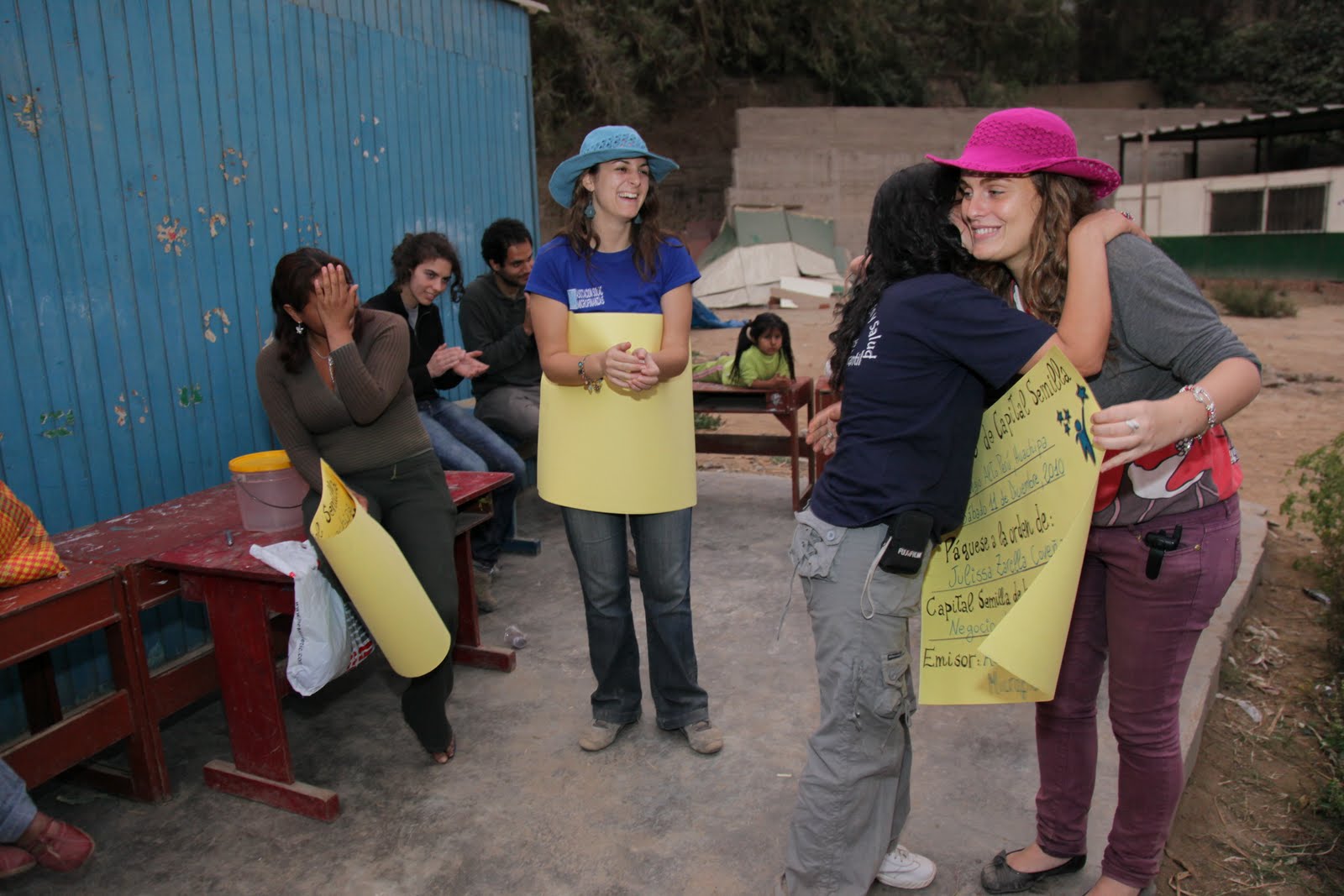
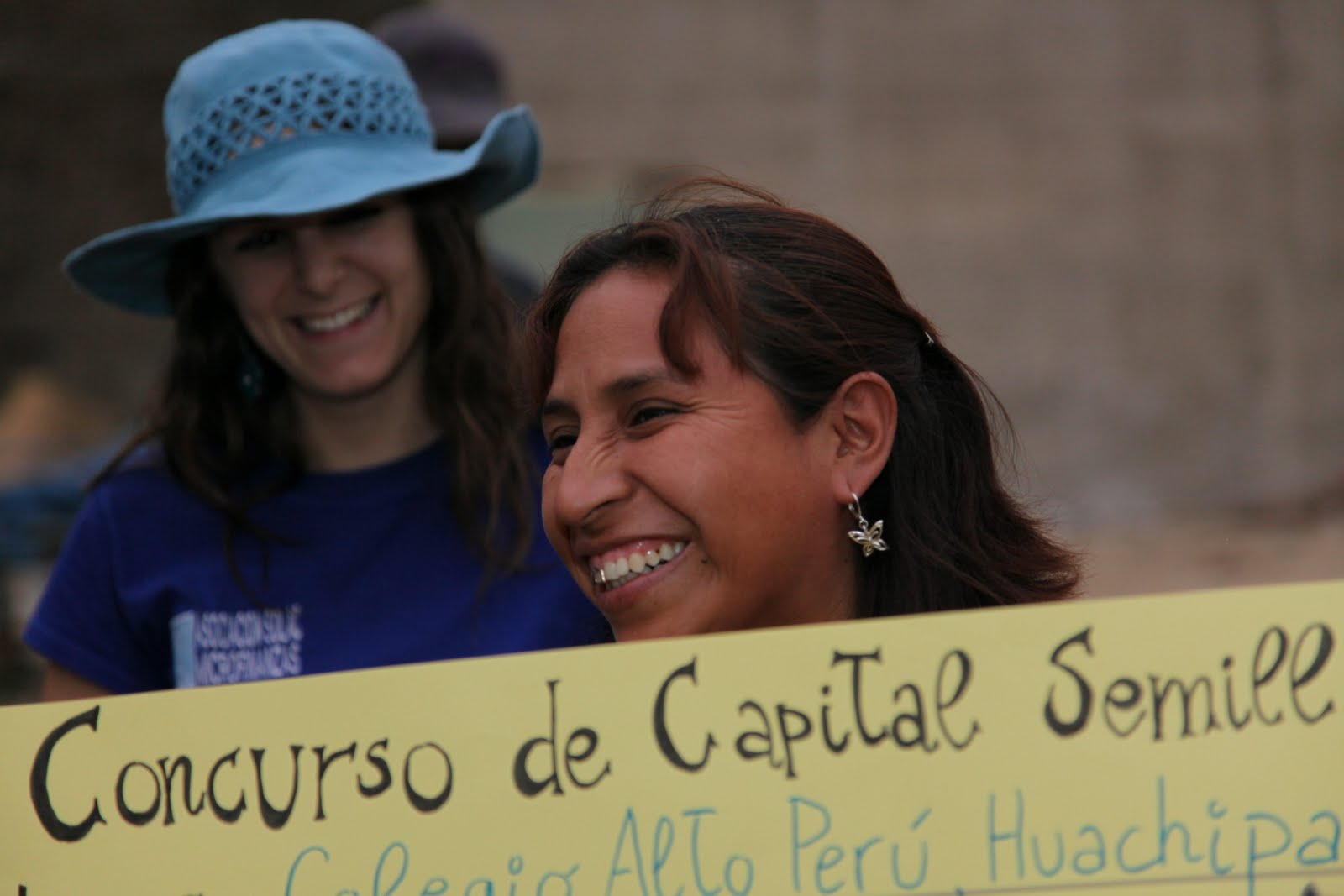
SOLAC decided to carry out an additional activity as part of the microfinance project, the Seed Money Competition (Concurso Capital Semilla). The purpose of this competition was to give funding to the most creative entrepreneurial ideas. The competition was only open to the beneficiaries of the microfinance programme, and those who wished to participate had to fill out a questionnaire where they evaluated the strengths and weaknesses of their existing business as well as proposed a new idea to improve their business in a substantial way (or to suggest a new business idea they wanted to implement). SOLAC made it very clear to the participants that the purpose of the competition was to fund ideas that would generate a significant change in the current situation of their economic activity. The competition would not approve ideas that included merchandise or any other investment that could be implemented with a loan from the microfinance project. A total of twelve people participated from the three communities.

After evaluating the proposals, SOLAC decided to interview some of the participants who seemed to have the most interesting ideas. A week after the participants gave in the proposals, SOLAC announced the three winners at the end of the fashion show. By coincidence, all three winners were from the same ASOL, Unidos para el Desarrollo, in Santa Isabel. One of winners was Emilia Huincho, the secretary from the ASOL who makes clothing and asked for a sewing machine she had needed for a very long time. That machine would allow her to modernise her merchandise and therefore get more orders from local factories. Another winner was Zarella Coveñas the treasurer of the ASOL who has a food delivery business. Zarella prepares food from her house for teachers at local schools nearby, as well as for construction workers who come to Alto Perú for the day. She had been receiving several very large orders from the schools (for 25 people instead of 5 to 10 people) but was unable to deliver because of the size and quality of her equipment. She asked for professional kitchen equipment. The third winner was Mary Gutierrez, a member of the ASOL who used to sell snacks and sodas from a mobile cart. Mary wanted to set up a small café where she would continue to sell snacks and sodas, as well as juices and cakes.

Each winner was assigned to one of the project organisers to go shopping for the materials they needed to implement their idea. An agreement was also signed by each one of them and by SOLAC, stating that the winners would use the materials bought to make their business grow, and that they would report to SOLAC on a regular basis to inform them about the development of their business with the new equipments for a period of three months. The agreement also stated that SOLAC was committed to follow each participant with their new equipment and to assist them in anything they needed. All the equipment was bought on the first week of December for the three participants. SOLAC is very happy about the follow-up of the winners and is looking forward to see the development of their businesses thanks to these new investments.

Seed Money Competition (Concurso Capital Semilla)


Practical Workshops and Fashion Show


The two practical workshops in Alto Perú began on the 23rd and 24th of October. The knitting and jewellery workshops started with a total of 16 and 25 participants respectively. SOLAC decided to implement strict rules for participating to the workshops to ensure the smooth running of the courses. A 5 PEN fine was charged to any participant arriving 15 minutes late or more to class, and a 10 PEN fine for missing a session. The workshops were extremely successful throughout the six weeks. Both Vilma and Gloria were very happy with the enthusiasm and the results achieved by the participants of the course.

At the end of the six weeks SOLAC, together with the participants and the teachers, organised a fashion show to give the participants the opportunity to show their families and the rest of the community the amazing work they accomplished throughout the course. A lot of people also took advantage of this opportunity to sell their products to other people in Alto Perú and to start making a name for themselves with their new activity in the community. The event was entirely financed by the fines collected from people arriving late to or missing the workshops sessions. One group was in charge of preparing food for the event, another to organise all the logistics (chairs, sound system, etc) and finally one woman decided to prepare small Christmas baskets (mainly food such as pasta, milk, etc) and to organise a raffle at the event for all the participants of the two courses. We invited the two teachers to present the different items to the audience. The participants of the knitting workshop presented a summer collection for babies and kids. The colours of the collection were pink, magenta and purple, and each participant designed and made one to three items for the collection (mainly a combination of top, hat and a bag). Each participant invited one kid from their family to model the item for the fashion show. For the jewellery workshop, the participants learnt a different ensemble (necklace, bracelet and earings) every week as well as several models of key rings. Each person brought some items they had done in class with the teachers as well as many others they had made by themselves. Many of them designed and made new models especially for the fashion show. We also had one man participating in the workshop who made jewellery for both men and women.

The event was a huge success; the audience was extremely impressed by the amazing work accomplished by the participants in terms of quality and creativity. All the participants received a diploma that certified the completion of a basic course. Out of the sixteen people who signed-up for the knitting workshop only ten completed the course due to time restrictions and other commitments. All the participants from the jewellery workshop completed the course, some of which were children of the beneficiaries of the microfinance project. The feedback from the participants was extremely positive, and we have had since then a lot of demand to continue with the courses.

The Fashion Show


Planning of Practical Workshops for Alto Perú


SOLAC decided to start practical workshops for the beneficiaries of the microfinance pilot project with the aim of giving the participants an opportunity to learn new skills that they may later use to start a new economic activity or to create an additional source of income (it is very common for micro entrepreneurs in Lima to have more than one small business).

We put together a list of six different options for the practical workshops according to what was more feasible to carry out in the community. The list of choices included: knitting and crochet, jewellery, yogurt, jam, pastry, and chocolate workshops. The members of each ASOL voted to decide the two workshops that we going to be implemented. The most popular choices were knitting and crochet, and the jewellery workshop. We contacted professional teachers for each workshop that were recommended to us by other NGOs, Vilma Acuña for knitting and Gloria Cabrera for jewellery, and we elaborated a six-week plan for each course. For the knitting and crochet workshop we decided, together with the teacher, that the course was going to take place twice a week on Tuesdays and Saturdays for three-hour sessions. The teacher explained to us that it was very important to have at least two sessions per week for the knitting and crochet workshop, as it is a very difficult skill to learn and requires a lot of practice at a basic level. For the jewellery workshop we decided to have a three-hour session per week on Sundays for six weeks. We also set a 5 PEN fee to sign-up for the course as a symbolic amount to ensure the commitment of people who decided to participate. The fee also included a set of materials for each participant for the course that they could take home to practice what they learnt in class. SOLAC decided to give priority for the signing-up to the workshop to the participants of the microfinance pilot project, then according to the vacancies in each course to the rest of the people of Alto Perú. The Head mistress of the local primary school, Nelli Villegas, agreed to let us use one of the classrooms of the school to carry out the workshops.

Saturday, July 24, 2010

Extension of our Microfinance Pilot Project

Due to the successful running of the two original ASOLs and to the high demand for participation from other people in the communities, we have decided to extend our pilot project to give approximately another 24 people in the area the opportunity to benefit from a microfinance scheme, as well as to offer our two initial groups the option of entering a second cycle of the project, with the opportunity of receiving higher loans.

In May we started talking to people in Santa Isabél, Unión Perú and Santa Crúz de Huachipa, to see who was interested in forming a new group. By the end of the month we had already formed two new groups, one in Santa Crúz de Huachipa and another in Santa Isabél.

Approved funding for the extension of our project by the Austrian Embassy in Lima

We are very pleased to announce that our application for funding from the Austrian Embassy in Lima for our extension of the Microfinance Project in Alto Peru has been approved. At a meeting with the Ambassador, Dr. Andreas Melán, and with Mrs. Karin Eckert, responsible for cultural issues and international cooperation, which took place at the end of May, we were told that the Embassy was happy to provide funding to our project and cover the remaining budget.

We would like to take this opportunity to sincerely thank the Austrian Embassy in Lima, Education World 86, as well as our other donors for allowing us to carry out our work!

New Training Sessions

As previously mentioned, we have decided to carry out the next training courses on entrepreneurship ourselves. Throughout April and May we have been creating a syllabus together with INCUBA Networks, using their manual as a basis to create one that has been greatly adapted to the requirements of the people in Alto Perú.

As we are strongly emphasizing the notion that a microfinance project is not only about the loans themselves, and recognizing that a training programme will develop a strong group atmosphere and a good relationship with the loan officers, we have designed four initial sessions which are compulsory for participants in order to receive a (or their next) loan.

Syllabus:

Session 1:
Understanding the environment and recognizing one’s own qualities as an entrepreneur

Session 2:
Brainstorming various business ideas, out of which three are selected to be put through an internal and external filter, in order to see which business idea is most viable. At the end of the session the participants decide what business they would like to invest their loan in.

Session 3:
Analyzing the market and the four Ps of the chosen business idea.

Session 4:
Bugdet (and breakdown of what the loan will be invested in)

The two new ASOLS:

ASOL “Las Triunfadoras” (Santa Isabél) and ASOL “Karin” (Santa Crúz de Huachipa)

After receiving an introductory session on what the Microfinance project consists of, the two newly formed groups, “Las Triunfadoras”, consisting of seven women and one young man, and “Karin”, which consists of six women, began with our four–session training course. The classes were very beneficial, both to the individual members of the team to support and guide them with their business ideas, as well as for the strengthening of the group dynamics and the relationship with the loan officer. By the end of the four sessions there had been a clear change in the level of comfort and trust between the group members.

The loan officers of each group then went to visit each person individually to fill in a questionnaire and discuss their business idea and the investment of the loan. Each case was then discussed at the office before the papers were prepared for the disbursements.

The disbursement of ASOL “Karin” took place on 7th June in Santa Crúz. Mrs. Karin Eckert from the Austrian Embassy took this opportunity to visit our project on site. She had the opportunity to meet the women, visit one of their sewing workshops and participate at the disbursement meeting. The group decided to name their ASOL after her, as a thank you for providing the funding required for the project.

The disbursement of ASOL “Las Triunfadoras” was held the following day (8th June) and was celebrated with soft drinks and cake. Group photos were taken and the members stayed longer to chat.

ASOLs “Sagrado Corazon de Jesus” and “Unidos para el Desarrollo”

Our two ASOLs which started in December last year have completed their fifth and sixth repayment meeting (on 11th May and 11th June respectively), and have herewith completed their first lending cycle. Although we have had two women with difficulties repaying the fifth loan, they have all managed to repay the whole amount by the end of the loan period. The repayment rates of the two groups have therefore been 100 % for the first cycle.

Almost all group members have been showing much interest in continuing with the project and were eager to receive the second cycle of the loans, in which they are entitled to a maximum of 800 PEN (around 280 USD) – depending on their repayment capacity.

Sagrado Corazon de Jesus has completed their four training sessions and have had their disbursement on 21st June. They are 11 members – all nine who have participated in the old cycle plus two new members (who have been accepted by all group members, but are, according to SOLAC rules, only entitled to a maximum loan of 400 PEN).

Unidos para el Desarrollo insisted on completing their initial classes before 11th June and therefore had their disbursement on the same day as the last repayment meeting. The ASOL consists of nine people in this second cycle – two members have left and a new participant has joined. The loan portfolio of this group is 4,450 PEN (approx 1,565 USD).

Thursday, April 15, 2010

Third and Fourth repayment meetings, and Education World 86 visit

We have had two more successful repayment meetings with the two ASOLs of Unión Perú and Santa Isabél. At the last one our visitors from the French NGO Education World 86, who arrived on the 2nd of April, attended the meeting to get to know the members of the ASOLs and see how SOLAC’s Microfinance programme is running.

Here are the thoughts of Melinda Tims, EW's secretary:

"Education.world-86, Solac´s sister NGO in France, has provided the venture capital needed to start up 2 microcredit groups in the Huachipa slums outside Lima. The French NGO has also had 3 members working in Peru since early April, working both with the microcredit team and with the local school in the same area ; this experience has provided a first-hand opportunity to see the work in progress. The results have been outstanding.

The Solac microcredit team brings together talent, intelligence, great commitment, and outstanding preliminary results. The first 2 women´s economic self-help groups have completed their business training workshops and are half way through their repayment cycle, and 2 new groups are currently being formed. The ground work for all of this has been carefully thought out and the team has been highly successful in trouble-shooting so as to avoid any pitfalls. This endeavor is an ongoing process, so much obviously remains to be done in this impoverished area in terms of integrated economic development. EW enthusiastically supports all this work in the field and extends its hearty congratulations for all that has been accomplished."

EW Secretariat - Dr. Melinda Tims, University of Tours (France)

End of training sessions with AVSI and planning of new course


On Saturday 10th of April we held the last of the series of eight training sessions on entrepreneurship ogranized in cooperation with the NGO AVSI for the members of the ASOLs of Unión Perú and Santa Isabél. Even though this course has come to an end, the cooperation between SOLAC and AVSI will continue in the form of monthly sessions where a professor hired by AVSI will be visiting the members of the ASOLs to follow up the progress of their micro-businesses and give them advice.

On the other hand, the Microfinance team is now in the planning stages of a new training course which will be offered to the members of the existing ASOLs and to the future members of the new ASOLs that will be formed in May. This training course will be carried out by SOLAC’s loan officers, who will start to be trained to give this course by INCUBA Network (http://www.incubanetwork.com/index.php), an organization which specializes in giving support and training to micro entrepreneurs.

SOLAC decided that it would be best for the members of the ASOLs to be receiving the entrepreneurial training directly from their loan officers – i.e. the Microfinance team – since the latter know them personally and can therefore better serve for their needs.

Wednesday, February 17, 2010

First Training session on Entrepreneurship - 16.02.10


As planned, the first training session on entrepreneuship took place yesterday afternoon, 16thof February, in Unión Peru’s communal room. AVSI accompanied the teacher who was coming to Alto Perú for the first time and introduced him to the beneficiaries. At the beginning of the class each person was asked to talk briefly about their business, after which the whole class discussed with the teacher the main concepts of entrepreuneuship i.e. What are the main characteristics of an entrepreneur? The class ended with a very interesting activity that aimed at stimulating the participants’ creativity to find new business ideas.
As mentioned before, a few of our beneficiaries told us that they will not be able to make it to the classes as they were at work. They explained that attending the course twice a week would be too difficult for them to arrange but that they would try their best to participate once a week. Due to this lack of availability, only two women from the ASOL Sagrado Corazón de Jesús and four members of Unidos para el Desarrollo attended the meeting. In addition four other people from Unión Perú who are not part of the Microfinance programme but have a small business in the area participated. Consequently, the teacher together with the participants decided to schedule classes only once a week on Tuesdays. SOLAC’s loan officers will have a meeting with their respective ASOLs on Friday to discuss this new alternative with the groups and ensure that all beneficiaries will get the opportunity to participate in the course.

Friday, February 12, 2010

Second repayment meetings - 11.02.10


The second repayment meetings were held last night at both communities. Again repayment went smoothly and the women were happy to attend and chat. We informed them about the course they will be starting on Tuesday which will take place for the members of both groups together. The majority seemed interested in this, although some people have already informed us that they will not be able to attend as they will be at work. This time, different to all others, we held the meeting with “Unidos Para el Desarrollo” outdoors. This turned out to be very nice, as it created a different, more casual relationship between all. Also, we have printed out photos that we have been taking at meetings and brought it to the meeting so that we were able to make a poster all together, which will be put up on the wall of the communal room of the community.

Training sessions starting Tuesday 16th


After a long delay in start, the members of both our ASOLs will be starting a course on entrepreneurship this coming Tuesday. Sessions will be held twice a week (Tuesdays and Thursdays) for two and a half hours each and will last for a month. Unfortunately, we were told by a few of our beneficiaries that they will not be able to make the classes, as they are at work. We are going to try our best to change the hours, so that all can attend. The syllabus, which we have been working on together with the organization which is organizing this course (AVSI), does look very promising - we therefore do expect the members who are available to participate.

New Funding Received


About a week ago we were informed that we will be receiving new funding for your project from the French NGO (Education World 86) which has been supporting us throughout this, as well as past SOLAC projects. Thanks to the 2,000 EUROS that they are sending us, we will be able to open two new ASOLs. We are planning to have our first meetings with them at the beginning of April. This will allow at least another 20 families in the area to benefit from our project.

We thank you very much for your support!